
Production Process of PP Hollow Formworks
PP hollow formworks, widely used in construction due to their durability and lightweight, undergo a precise five-step production process. Here’s a detailed breakdown:
2/6/20261 min read
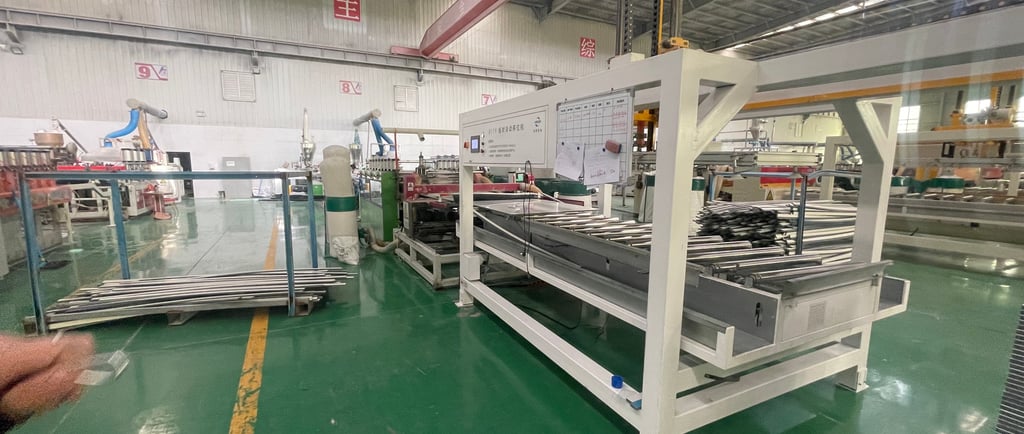
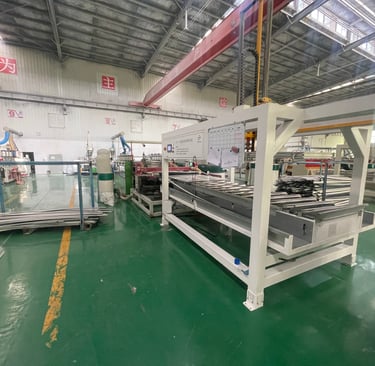
PP hollow plastic formworks, widely used in construction due to their durability and lightweight, undergo a precise five-step production process. Here’s a detailed breakdown:
First, raw material heating initiates the production. Polypropylene (PP) resin, mixed with functional additives like anti-aging agents and reinforcing fibers, is fed into an extruder. The extruder’s heating zones gradually raise the temperature to 180-220°C, melting the mixture into a homogeneous molten state. This step ensures the material’s fluidity for subsequent molding, with strict temperature control to avoid degradation of PP properties.
Second, hollow core production takes place. The molten PP is pushed through a specialized die that forms the internal hollow structure. The die features a series of internal baffles and channels, which create the interconnected hollow cavities. These cavities not only reduce the template’s weight but also enhance its structural stability. Coolant circulates around the die to partially solidify the hollow core, maintaining its shape as it exits the extruder.
Third, covering with solid surface panels follows. Two additional layers of molten PP (the solid panels) are extruded simultaneously to cover the upper and lower surfaces of the hollow core. These panels are made of a denser PP mixture to provide a smooth, wear-resistant outer layer. The three layers (hollow core + two solid panels) are carefully aligned to ensure full adhesion at the interfaces.
Fourth, heat extrusion for integration is critical for structural integrity. The combined layers pass through a secondary heating chamber and a calendering roller system. The temperature is maintained at 160-180°C to reactivate the molten PP, allowing the core and panels to fuse into a single unit. The calendering rollers apply uniform pressure, ensuring consistent thickness (usually 12-20mm) and flatness across the template.
Finally, automatic cutting completes the process. The continuous integrated sheet is fed into a computer-controlled automatic cutting machine. Based on preset dimensions (common sizes include 1220×2440mm), the machine makes precise cuts, ensuring clean edges and accurate sizing. The finished PP hollow templates are then inspected, stacked, and ready for packaging and delivery.
Solutions
Comprehensive concrete formwork and reinforcement systems.
Contact
Email: kevin@zhuniuformwork.com
Whatsapp/Wechat: +86 180-5453-3152
© 2025. All rights reserved.Company:Linyi Zhuniu Building Materials Co., Ltd