
Which Type of Formwork Is More Economical for Structure Constructions?
Formwork typically accounts for 20-30% of total construction costs, making its economical selection critical.
12/31/20251 min read
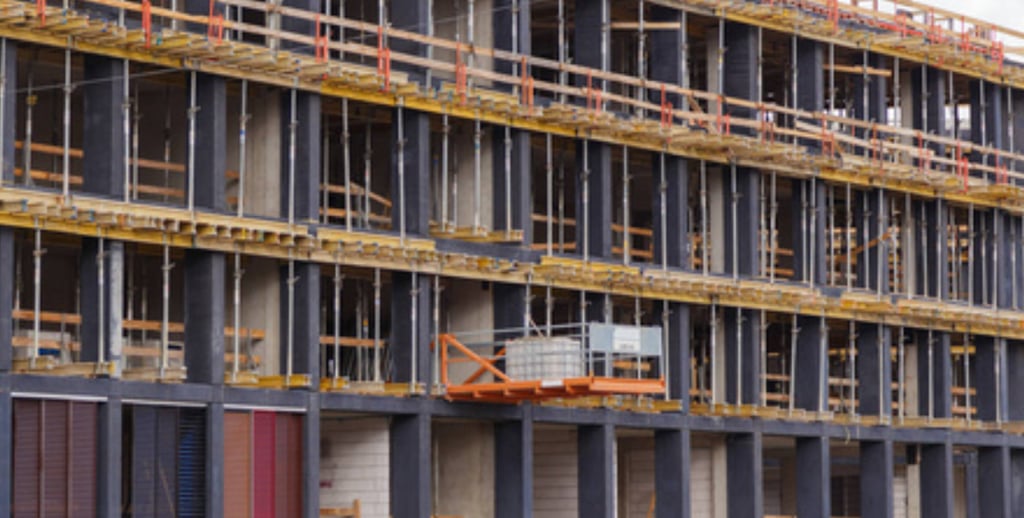
Formwork typically accounts for 20-30% of total construction costs, making its economical selection critical. three common types—timber,steel,and plastic—vary significantly in cost-effectiveness based on project scale, timeline, and design complexity.
Timber Formwork has a low initial cost and is highly adaptable for unique shapes or small, one-off projects. However, its low reuse factor (typically 5-10 times), high labor demand, and slower cycle times make it less economical for large-scale or repetitive structures like high-rise cores or multi-story identical floors.
Steel formwork requires higher initial investment but offers exceptional durability (50-100 cycles). Its rigidity ensures consistent concrete finish, reducing rework costs. However, steel is heavy, demanding more labor and machinery for transportation and installation—raising short-term operational expenses. It is most economical for large repetitive structures (e.g., high-rise columns, bridge piers) where frequent reuse offsets upfront costs.
Plastic formwork has moderate initial costs and a reuse rate of 50-80 cycles. It resists corrosion and moisture but lacks rigidity for complex structures, limiting application scope. Its cost-effectiveness is confined to small, simple projects (e.g., retaining walls, sidewalks).
In conclusion, economical formwork depends on project specifics: timber for small, short-term projects; steel for large repetitive structures with long timelines; plastic for simple, small-scale works.
Solutions
Comprehensive concrete formwork and reinforcement systems.
Contact
Email: kevin@zhuniuformwork.com
Whatsapp/Wechat: +86 180-5453-3152
© 2025. All rights reserved.Company:Linyi Zhuniu Building Materials Co., Ltd